

As-is vs Subject To
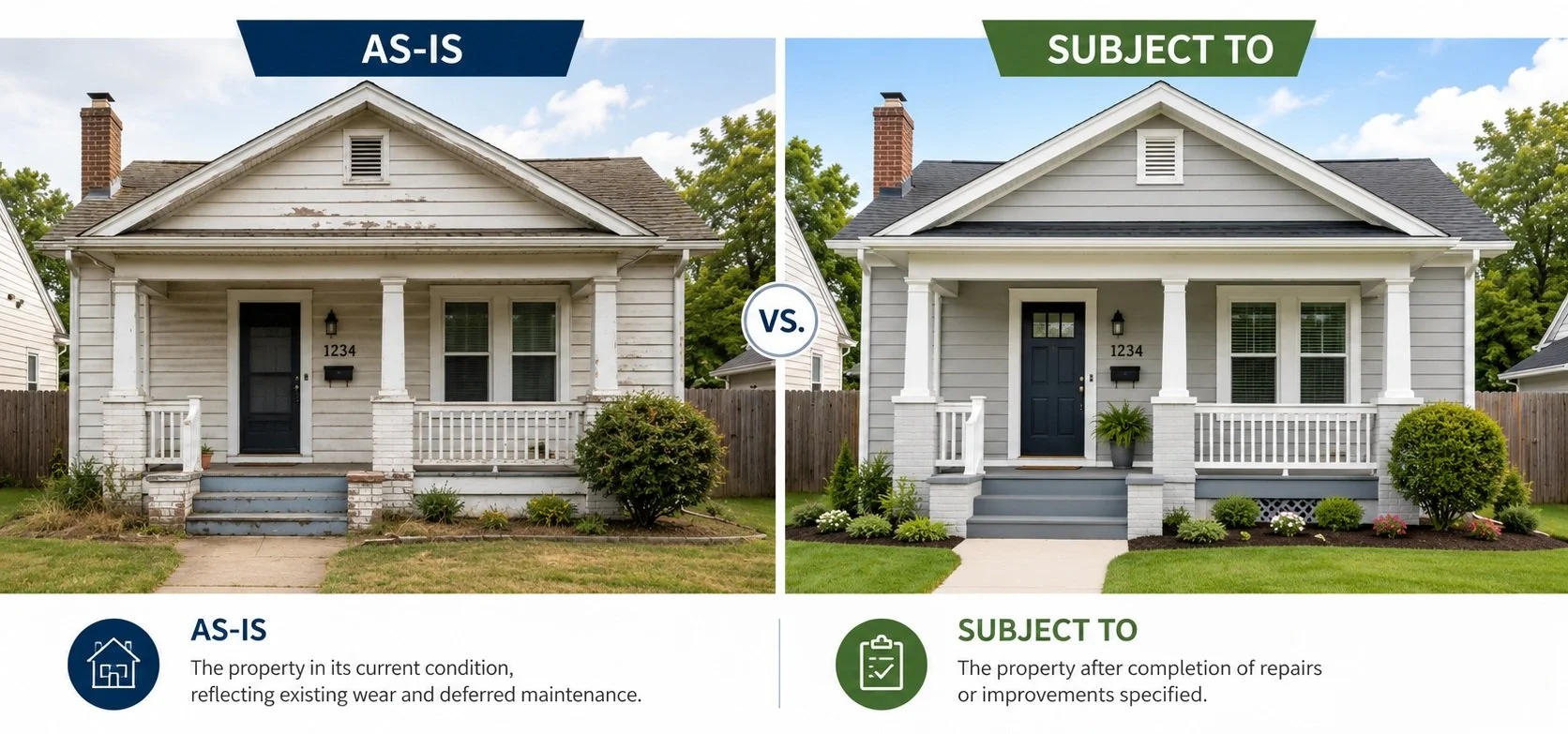
An appraisal reported “as-is” reflects the market value of a property in its actual physical condition as of the effective date. That does not mean the appraiser overlooks deferred maintenance, defects, or safety concerns. Those conditions should still be observed, disclosed, and analyzed. The distinction is simple: the value reflects the property as it exists today.
A “subject-to” appraisal answers a different question. Instead of valuing the property in its current condition, the appraiser develops a value based on the assumption that specifically identified repairs, improvements, or construction have been completed. The resulting value is therefore contingent on those conditions actually being satisfied.
The presence of a defect does not automatically turn an appraisal into a subject-to assignment. USPAP requires appraisers to identify relevant property conditions, analyze their effect on value, and clearly disclose applicable assumptions and limitations. USPAP does not generally make the appraiser responsible for determining which repairs are necessary for loan approval.
That distinction matters because appraisers and lenders have different responsibilities. The appraiser analyzes the property and its market value. The lender or underwriter applies investor, agency, and internal lending requirements and determines whether a reported condition requires repair, inspection, escrow, or some other action. In short: appraisers analyze; lenders decide.
An as-is appraisal can therefore be entirely appropriate even when a property has deferred maintenance or other deficiencies. The market may recognize those issues through a lower price, and the appraisal can account for their effect through condition analysis, comparable sales, or, when appropriate, consideration of a cost-to-cure. The appraisal gives underwriting a picture of the property’s current market value rather than automatically assuming a repaired condition.
Problems most often arise when the intended assignment conditions are unclear. If a lender requires a subject-to value, the repair or condition should be clearly identified when the appraisal is ordered. Clear communication keeps appraisers within their valuation role, allows lenders to retain responsibility for credit decisions, and produces reports that are more efficient, compliant, and defensible.